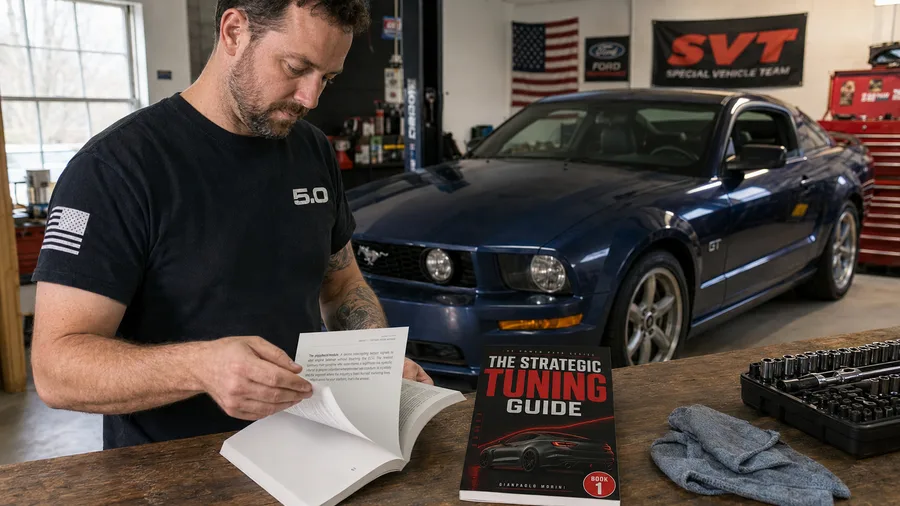
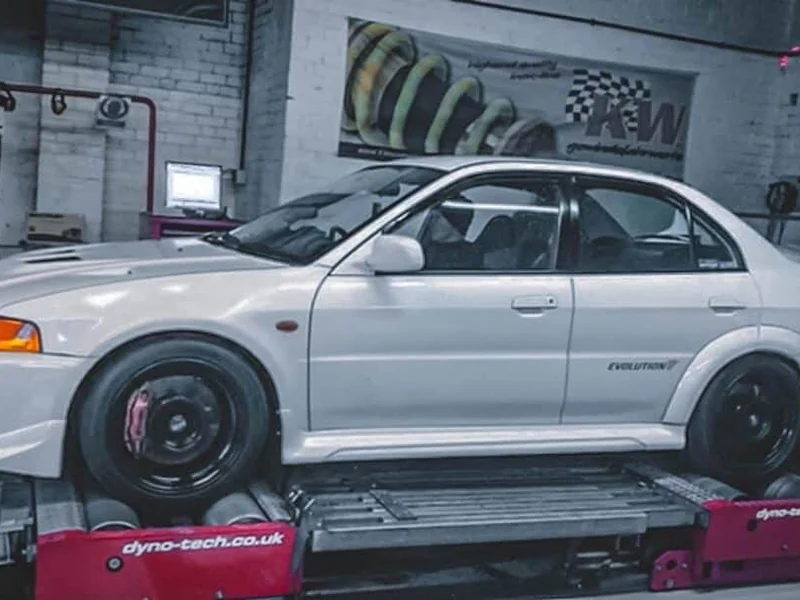
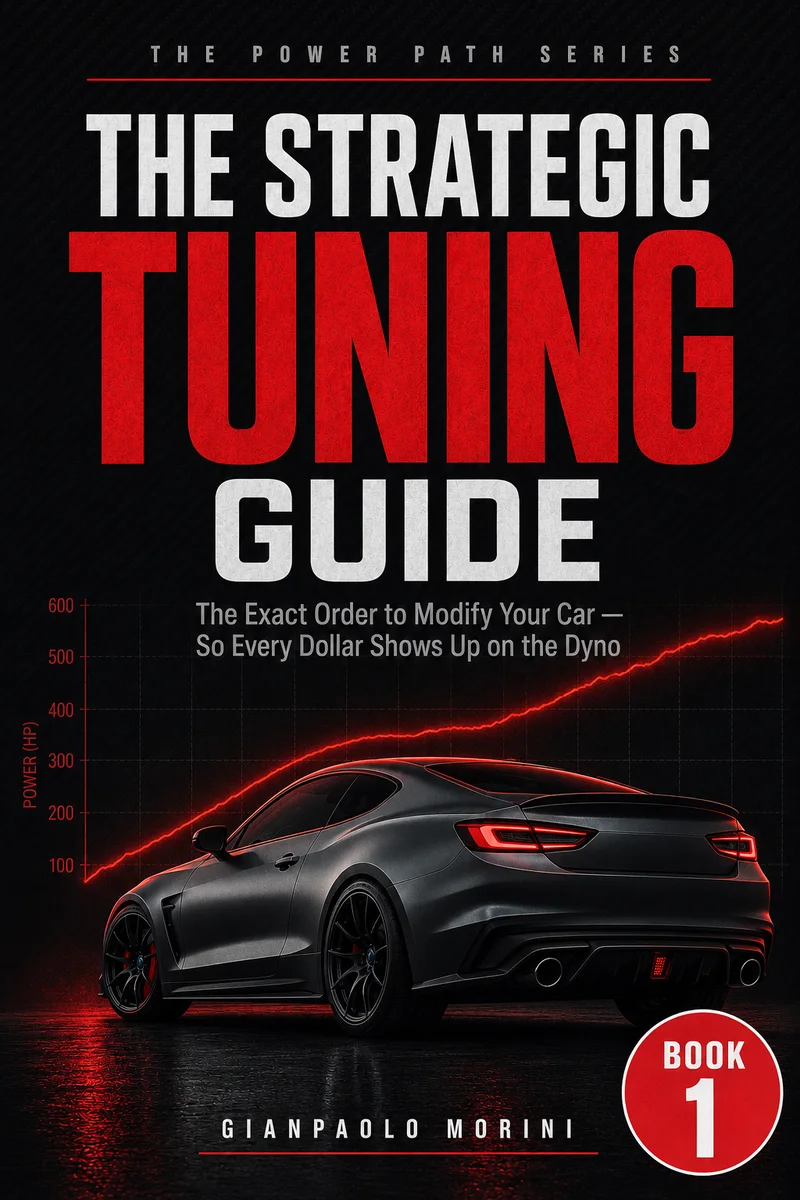
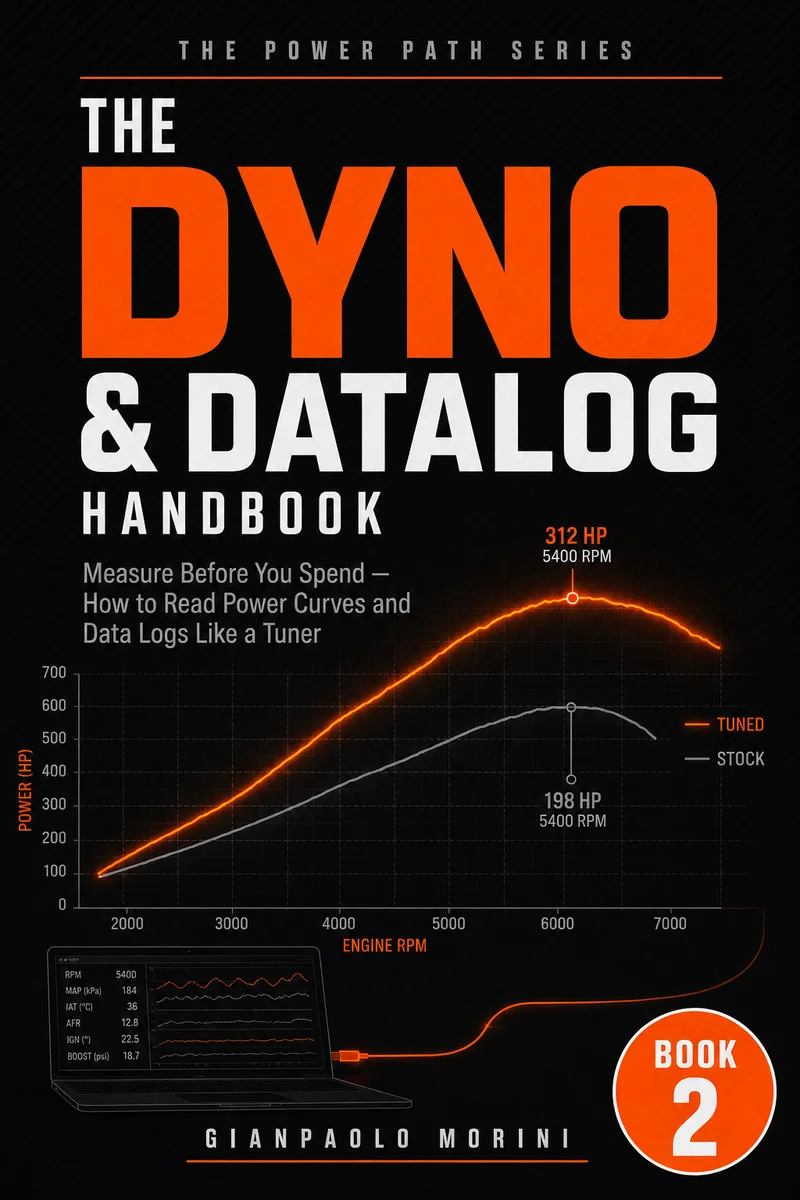
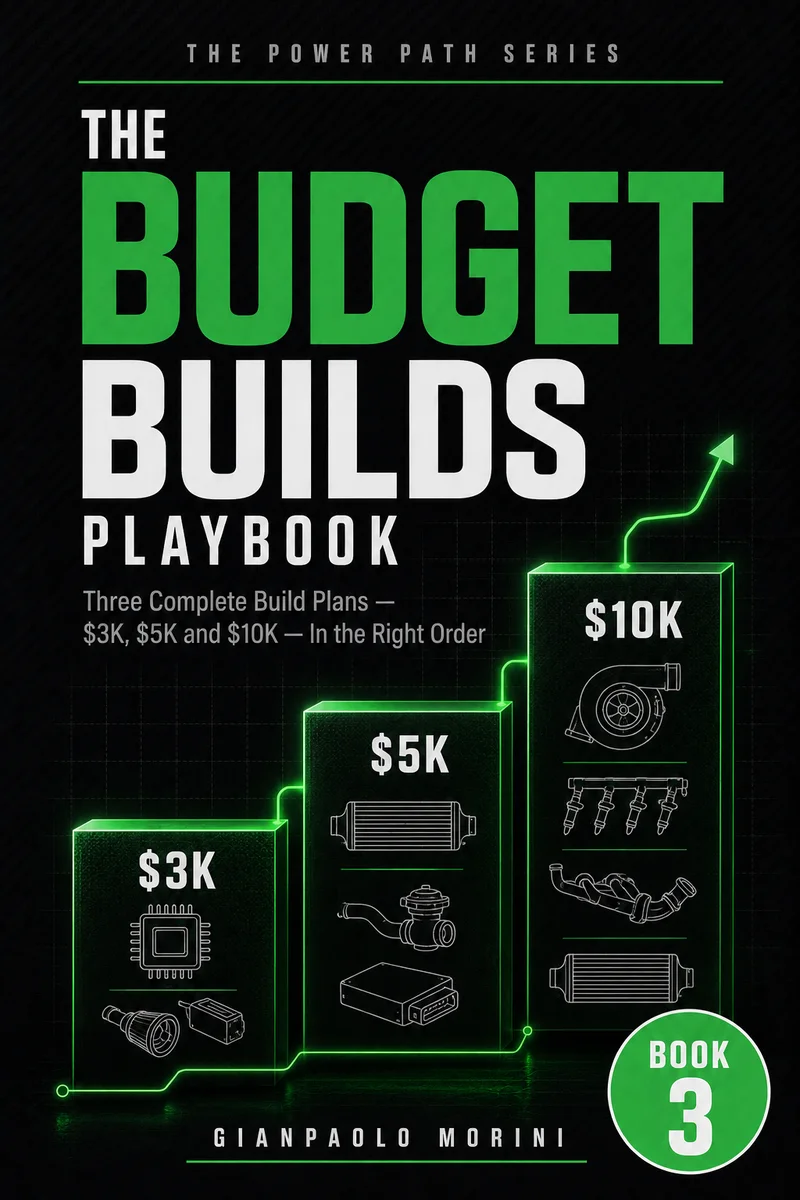
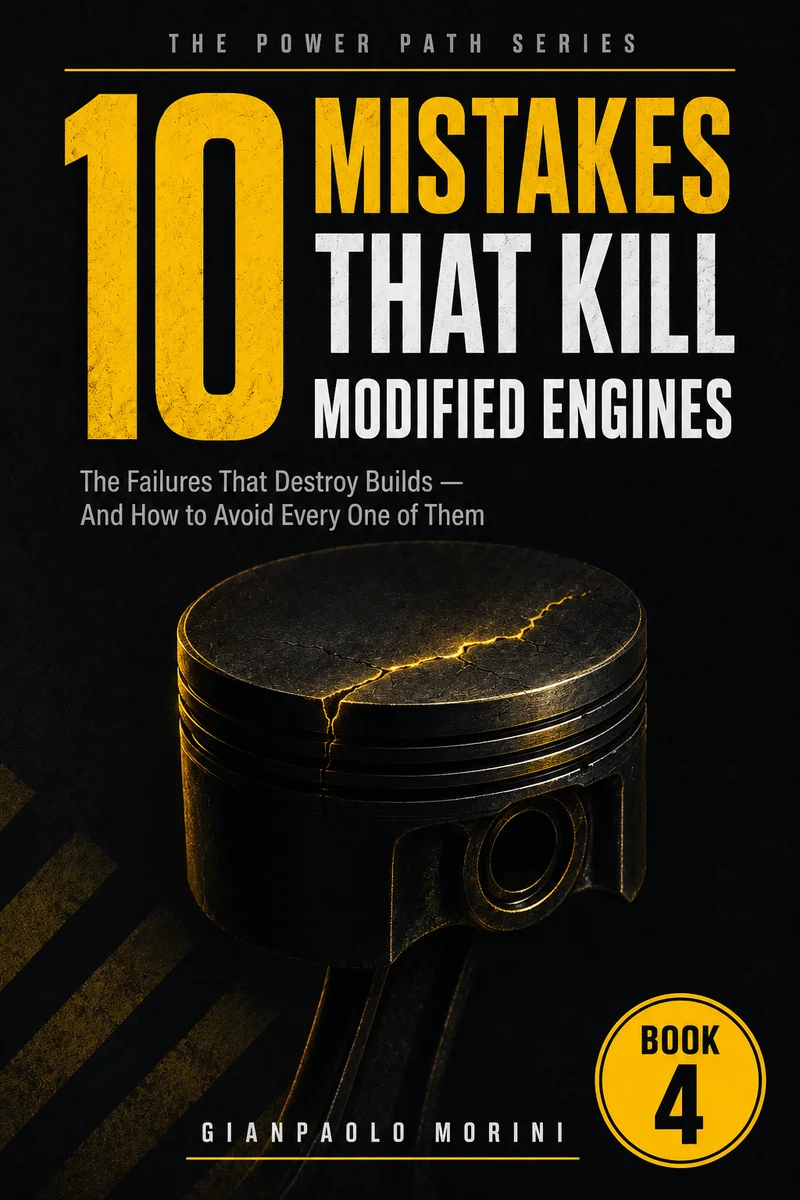
The exact order to modify your car, so every dollar you spend shows up on the dyno — not just in your exhaust note.
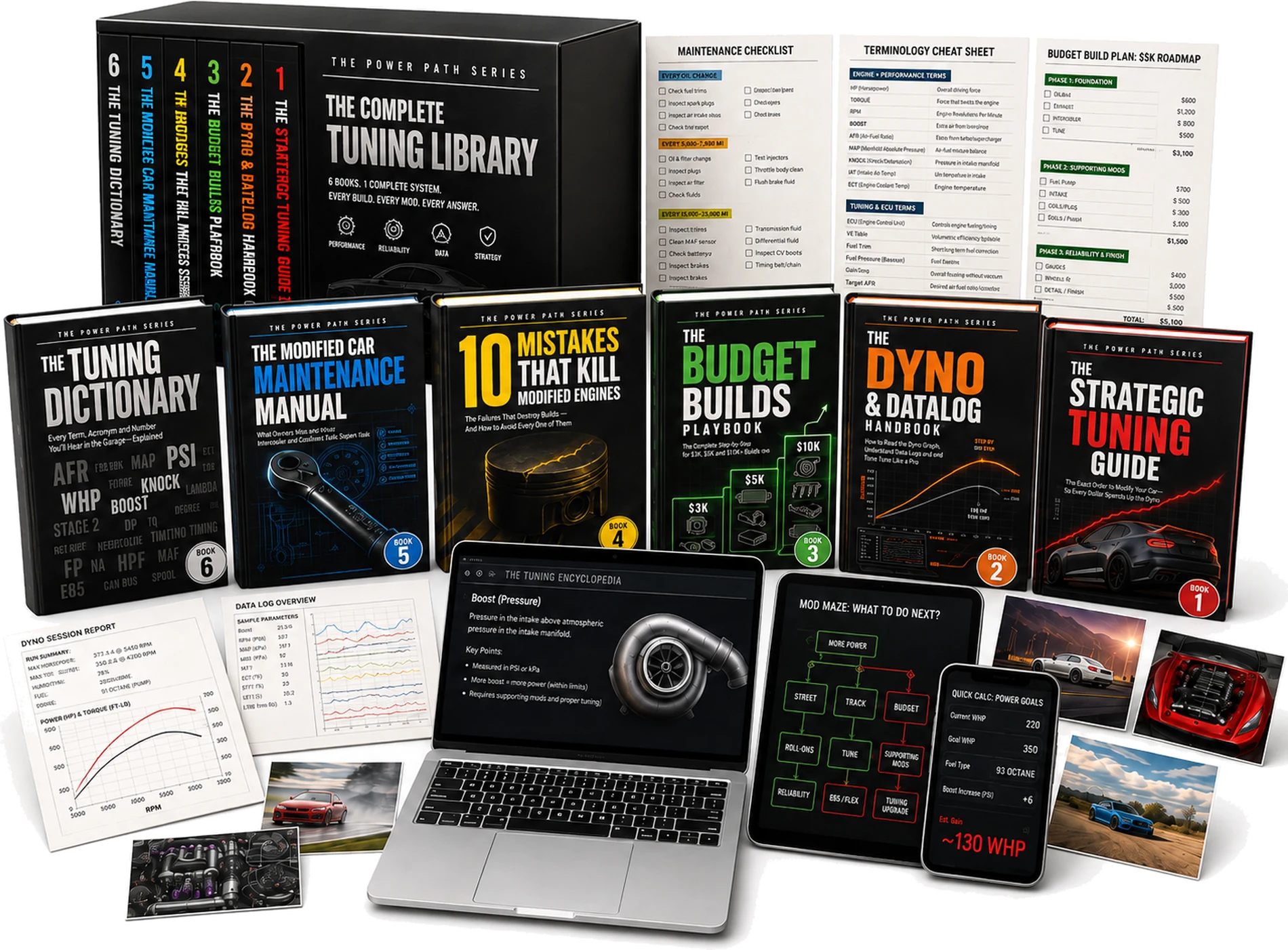
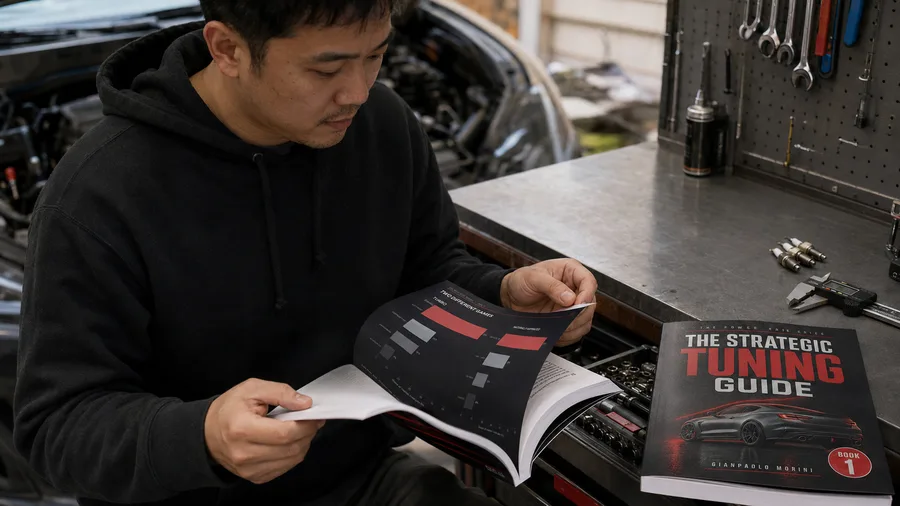
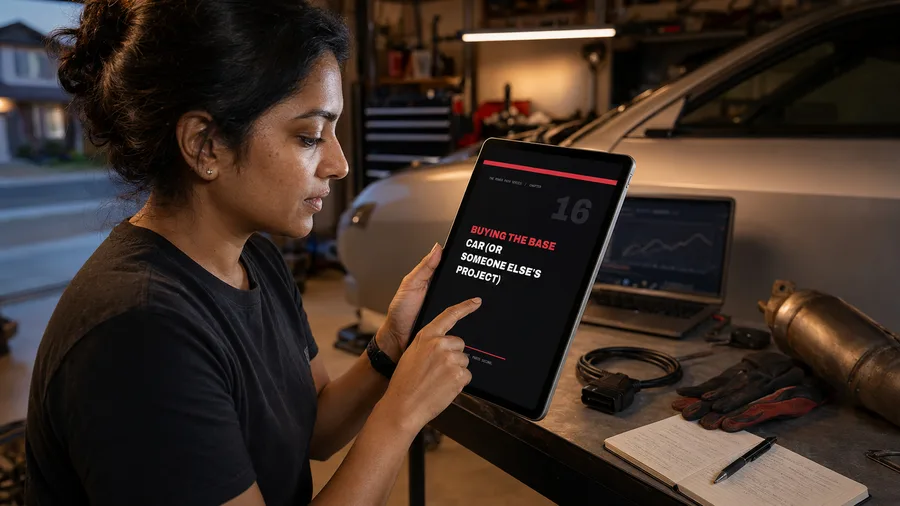
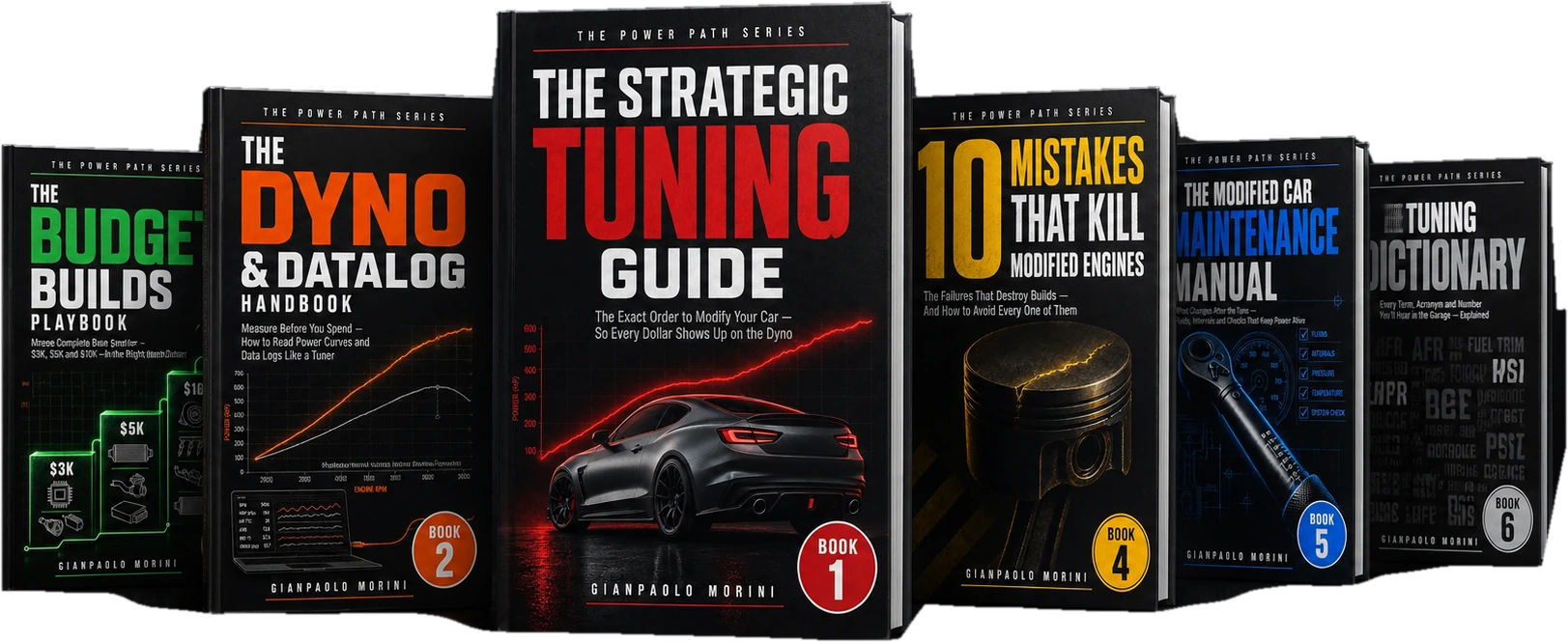
The Power Path Series is the complete 6-book system that shows you the exact order to modify your car — so every dollar shows up on the dyno, not just in your exhaust note.
Measure. Tune. Support. Hardware. Chassis. Five stages, one order, and a documented reason for every dollar that leaves your account.
A dyno sheet and a datalog turn guesswork into engineering. You can't improve what you never baselined.
On a turbo car a proper calibration is worth more than intake, exhaust and filter combined — for a fraction of the cost.
Fuel, cooling and clutch decide whether the number you made on Saturday survives until Friday.
Every platform has a limit. Learn where yours is before you find it at 6,000 RPM.

You hear it every time you drive it. The engine that pulls, then flattens out exactly where you want it to keep going. The plan you've been building in your head for months — browser tabs full of parts, forum threads read at 1 AM, that one YouTube build you've watched three times.
You're not short on desire. You're not even short on budget.
What's stopped you is the question underneath all of it: "If I spend this money… will it actually work?"
Because you've seen what happens to the guys who guess.
"A proper build costs $15K."
No. A proper build costs $3K in the right order.
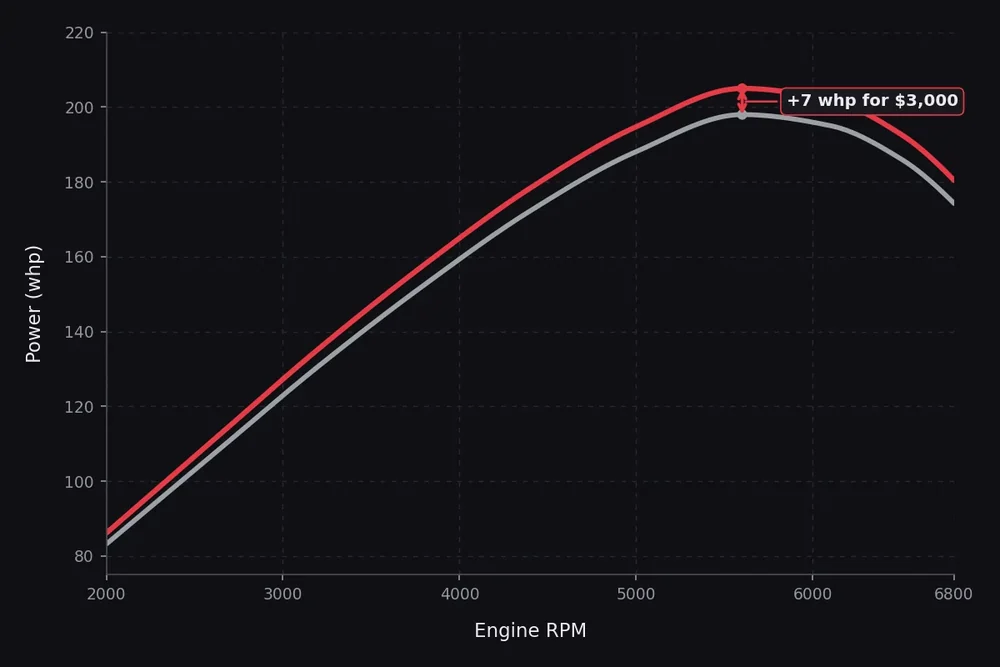
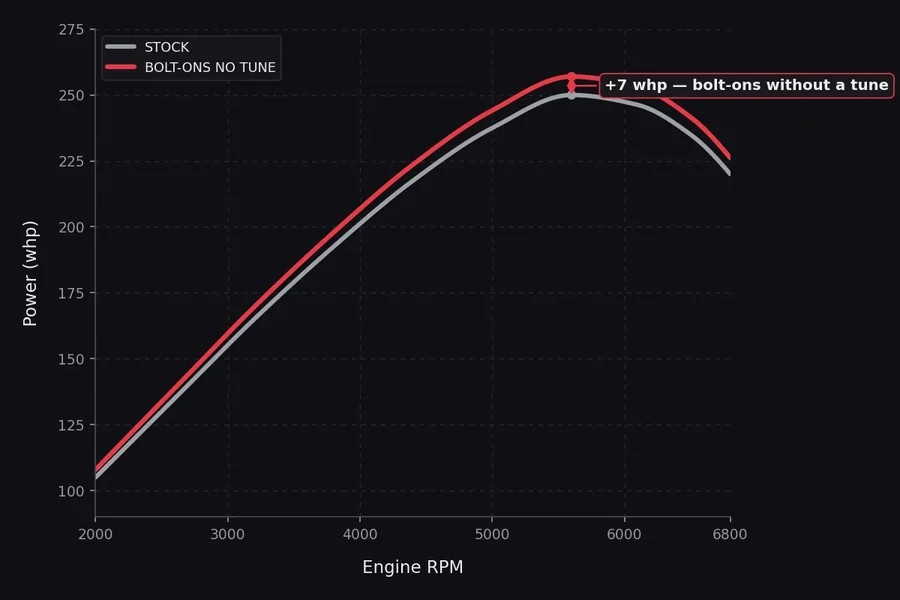
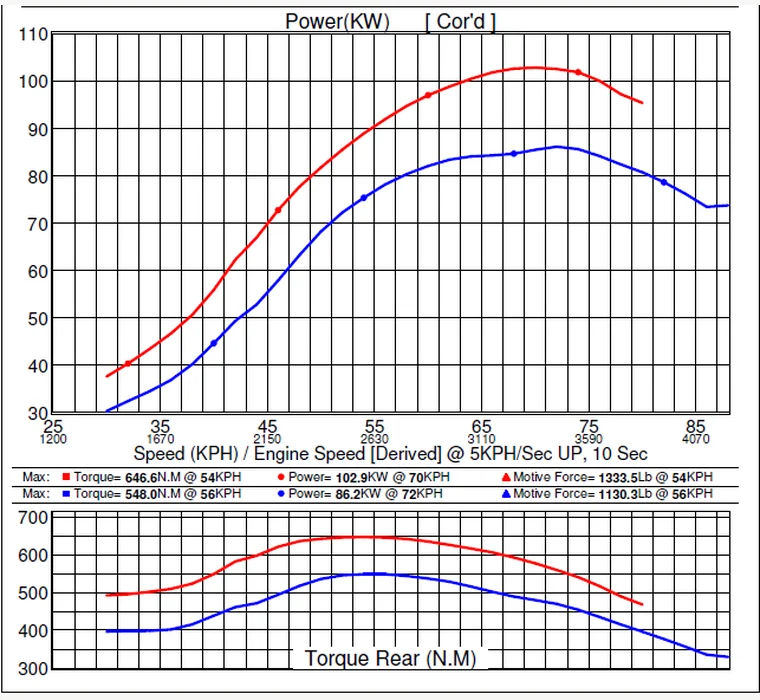
He spent $3,000 on mods. The dyno showed 7 horsepower.
Cold air intake. Cat-back exhaust. A set of wheels that looked incredible. Then he finally strapped the car to a dyno — and watched the operator try not to laugh. Seven horsepower. For three grand.
It's the most common story in car culture, and almost nobody talks about it: most people modify their cars in the wrong order. They buy what looks good, what sounds good, what the forum hype told them to buy — and the dyno doesn't care about any of it.
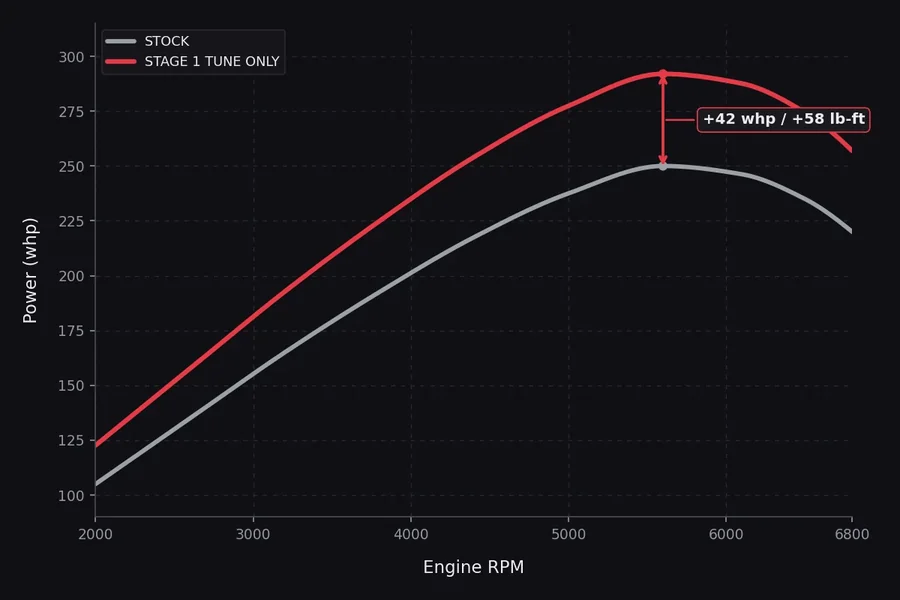
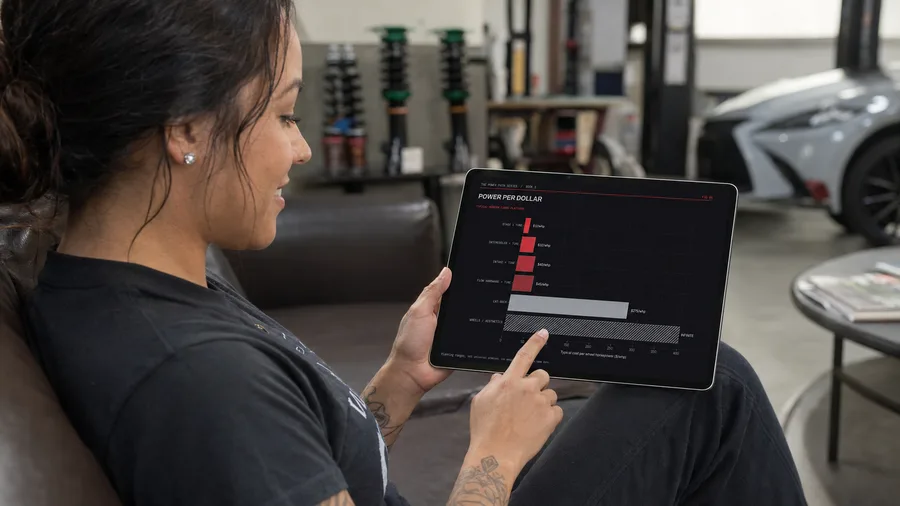
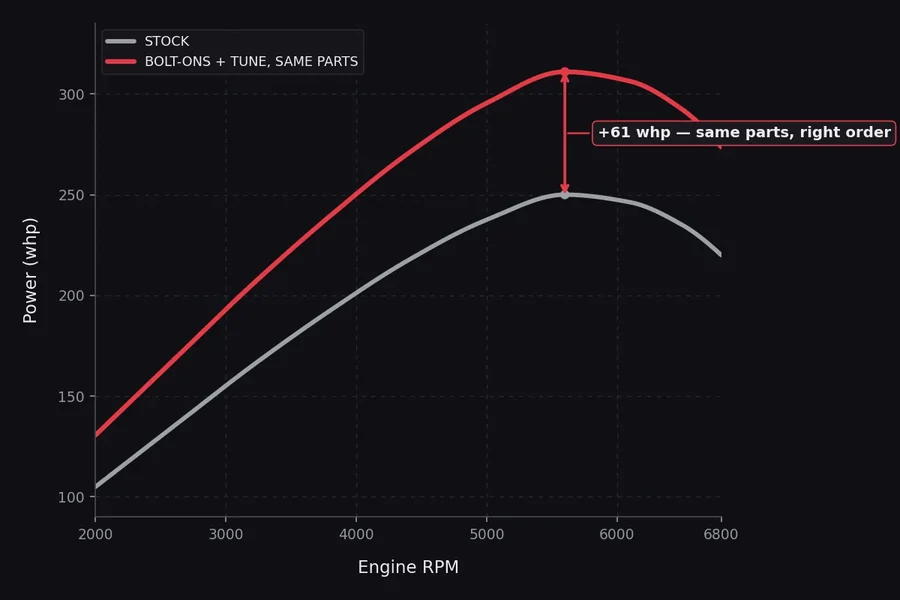
That flat gray line? That's what "bolt-ons without a strategy" looks like when someone actually measures it.
The Power Path is the modification hierarchy that professional tuners follow instinctively — and that almost no one ever explains to the people actually paying for parts:
Measure first. You can't improve what you haven't baselined. A dyno sheet and a datalog turn guesswork into engineering.
Software before hardware. On modern turbocharged cars, a proper tune is worth more than intake, exhaust and filter combined — for a fraction of the cost.
Reliability is a budget line, not an afterthought. Every platform has limits. Know them before you find them at 6,000 RPM.
Six books. One system. Every step in the exact order it should happen.
Nobody sets out to waste it. It leaves in pieces, over months, each one justified on its own.
$340. It sounds incredible. Every review says it's the first thing you should buy. The ECU quietly compensates and the power stays exactly where it was.
$1,100. Now it sounds like the car in the video. A stock ECU has no map for the extra flow, so it pulls timing to stay safe. Net gain: noise.
$1,200. They look right. They also weigh four pounds more per corner than the ones that came off, which the car notices on every launch.
$150. The number on the screen is seven higher than stock. The operator has seen this exact sequence forty times this year and says nothing, because what is there to say.
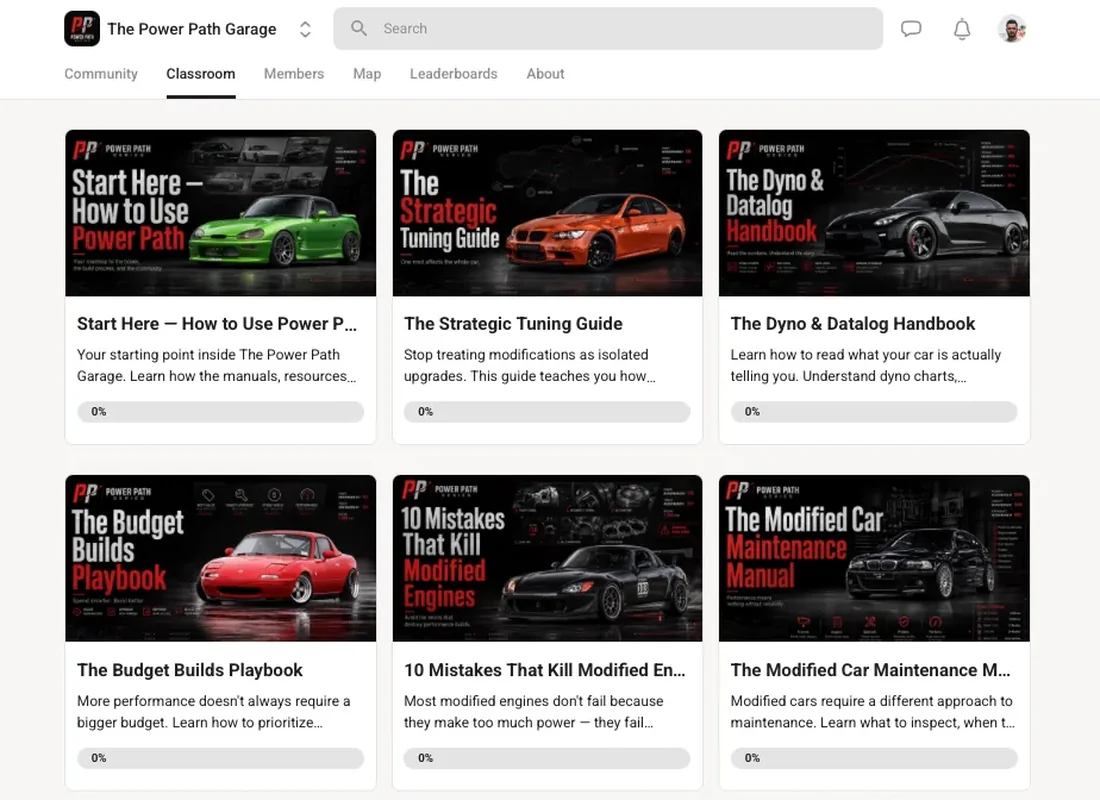
The master roadmap. Every other book plugs into this one.
Measure before you spend. Guessing is the most expensive mod there is.
$3K, $5K and $10K — fully mapped, in the right order.
The failures that destroy builds — and how to avoid every one of them.
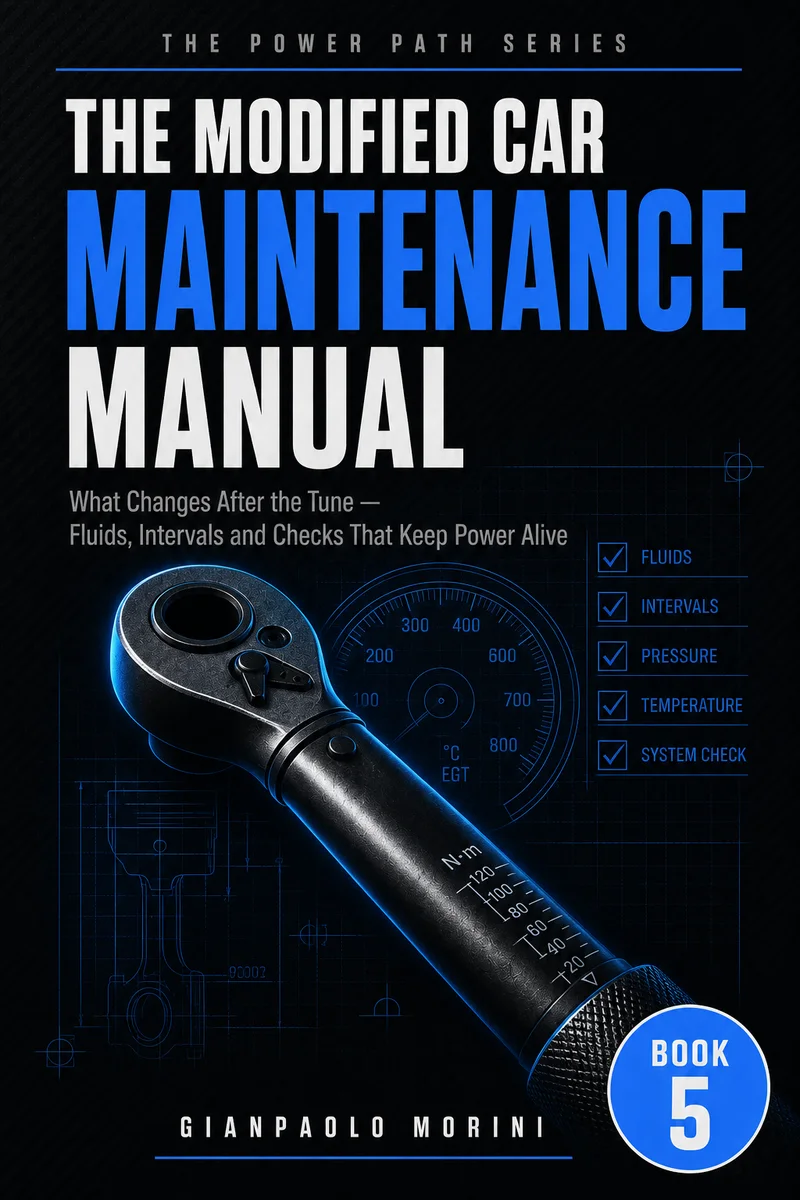
What changes after the tune. Because making power is easy — keeping it isn't.
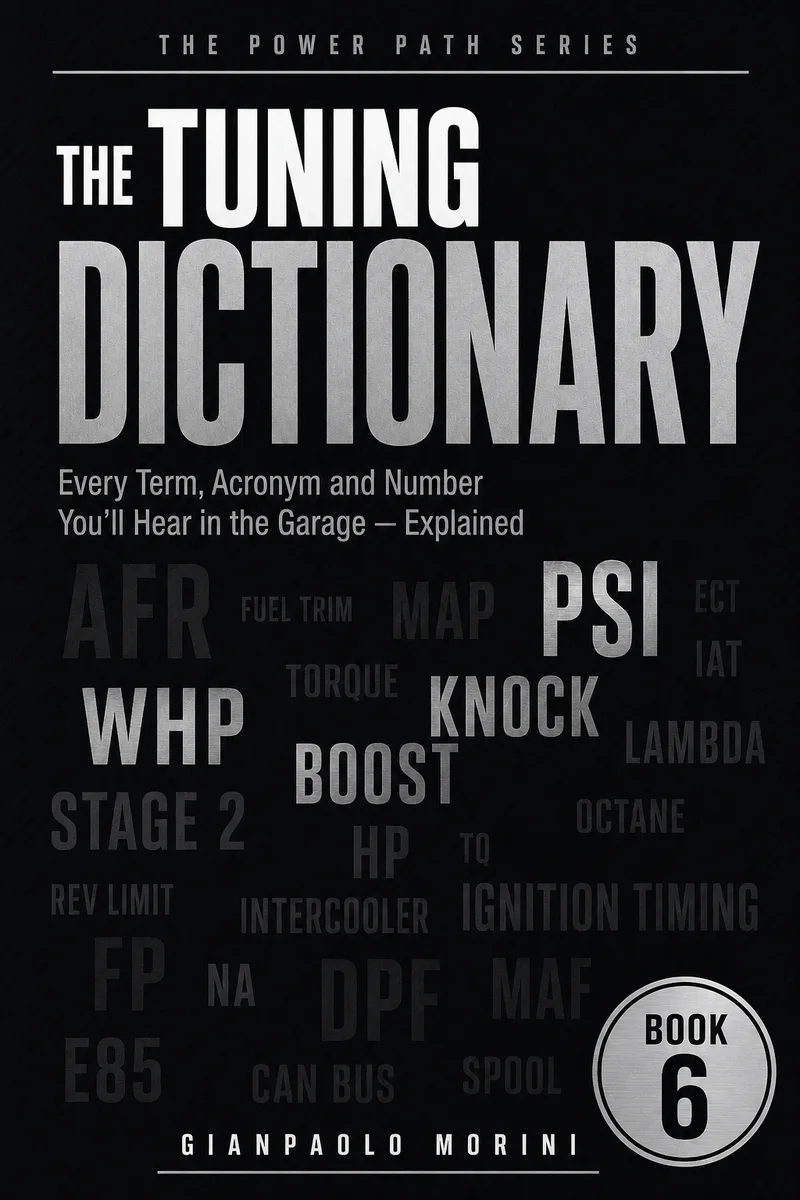
Every term, acronym and number you'll hear in the garage — explained.
| What you get | Guessing it out (free) | One random YouTube guide (free-$20) | The Power Path Series $47RECOMMENDED |
|---|---|---|---|
| A written, ordered plan for your car | ✕ | ✕ | ✓ |
| Platform-specific cost & gain data | ✕ | Sometimes | ✓ |
| Reliability ceiling & support-layer guidance | ✕ | Rarely | ✓ |
| Budget plans at 3 tiers ($3K/$5K/$10K) | ✕ | ✕ | ✓ |
| Mistake-proofing before you spend | ✕ | ✕ | ✓ |
| Real cost of a wrong first move | $500-3,000+ | $500-3,000+ | $47, once |
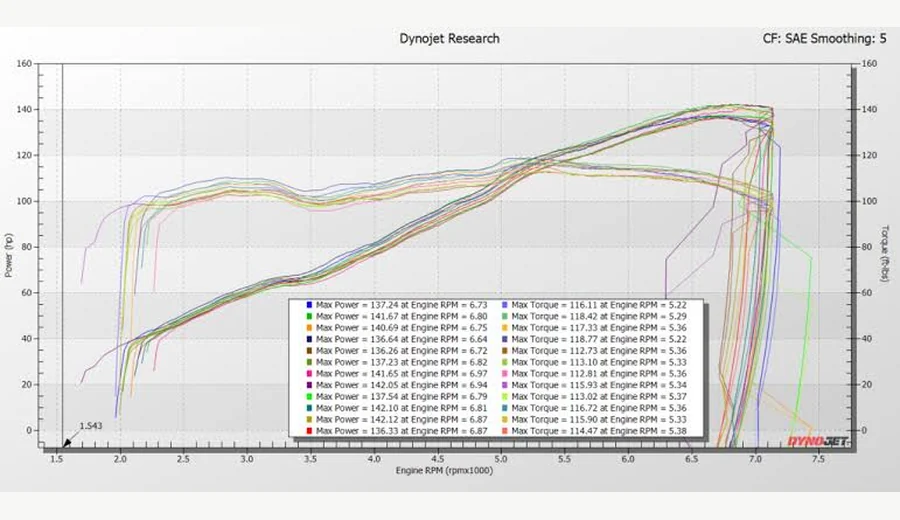
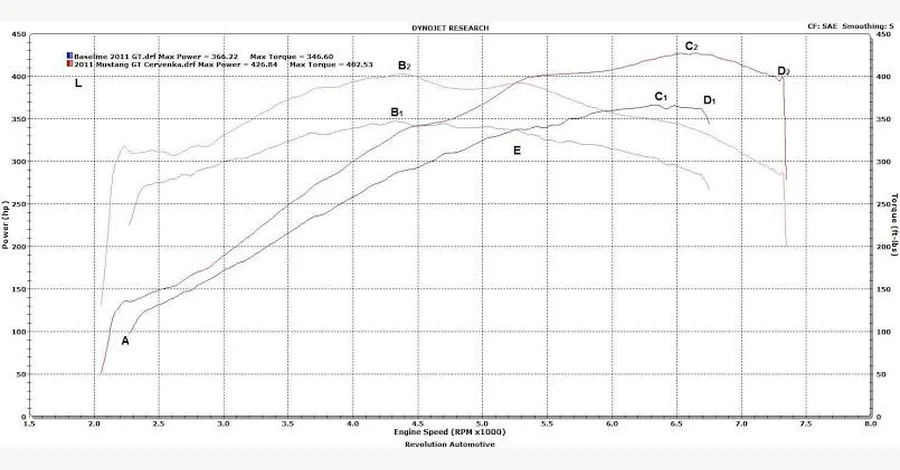
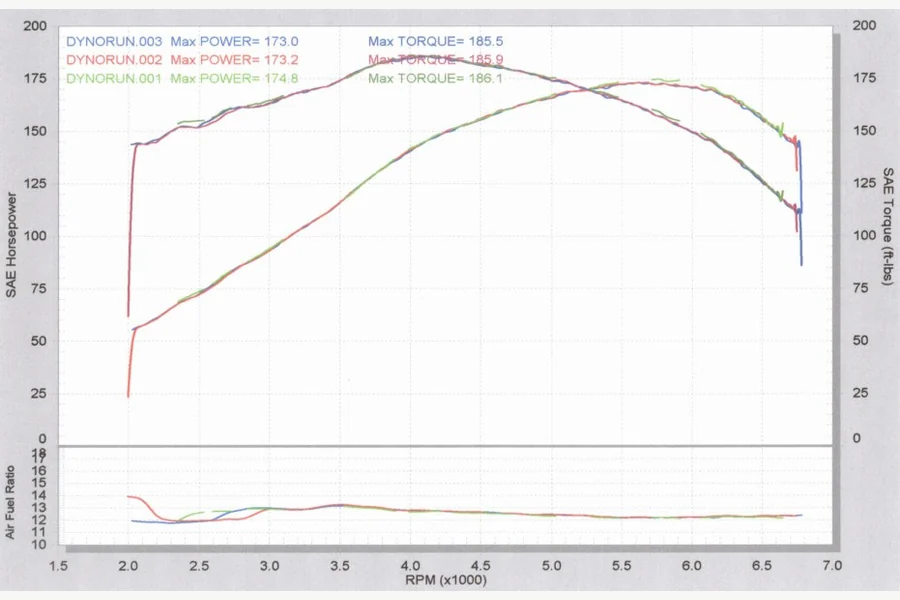
Every graph in this series comes from real dyno sessions and real datalogs — not marketing estimates.


I've watched hundreds of tuning videos, but I still didn't know what order to upgrade my car in. This series finally connected everything. I now have a realistic plan instead of just buying whatever part looks cool.
I was ready to spend almost $2,000 on parts that wouldn't have worked well together. After reading the first guide, I completely changed my build plan. The books paid for themselves before I even installed anything.
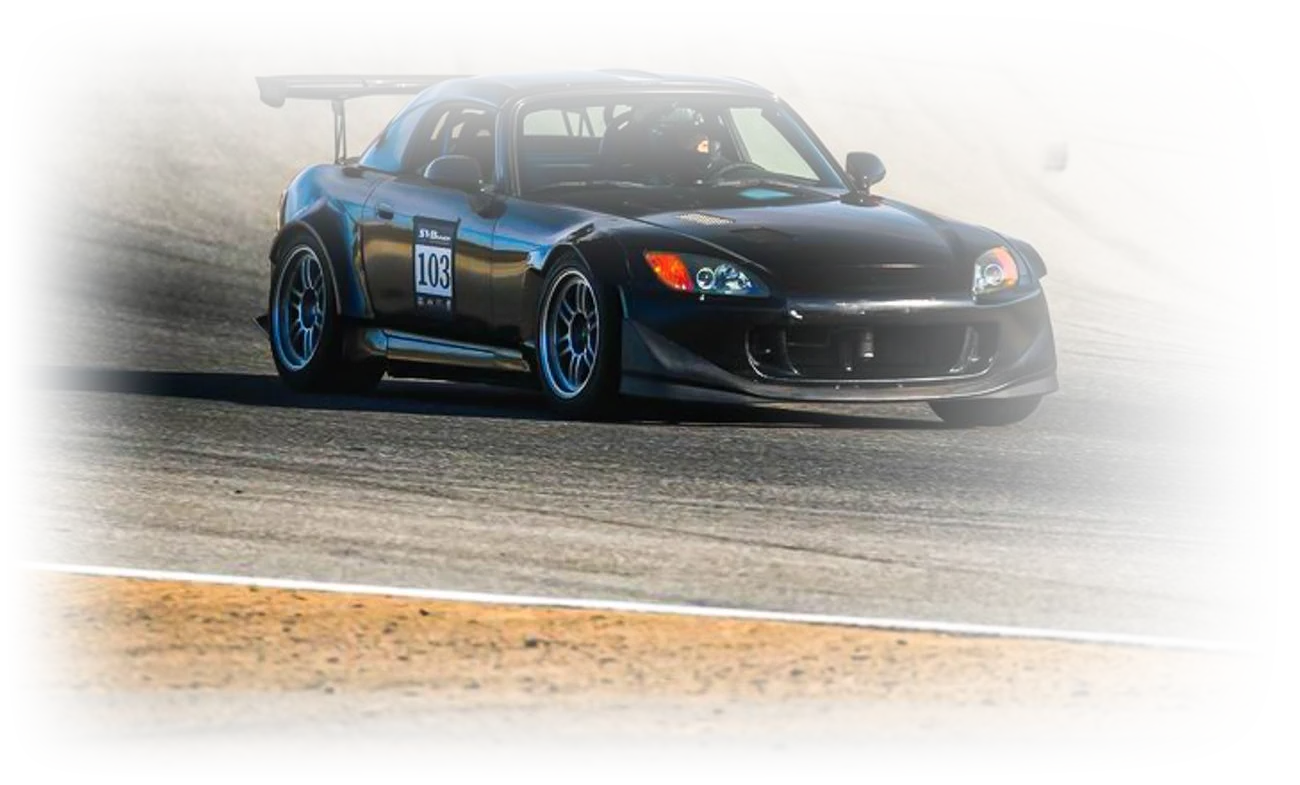
I'm building a street-focused S2000 and wanted more performance without ruining the balance of the car. The sections about setting goals, choosing compatible upgrades and keeping the car reliable were especially useful.
What I appreciated most was the realistic approach. It doesn't pretend that every bolt-on part will transform your car. It explains the tradeoffs, supporting modifications and why certain combinations work better than others.
I have a 2005 Mustang that I'm slowly turning into a reliable weekend car. The series helped me separate the upgrades I actually need from the ones that can wait. My plan is now safer, cheaper and much more focused.
Before reading this, I thought of the intake, exhaust, fuel system and ECU as separate upgrades. The series showed me how changing one part affects everything else. That alone changed the way I look at performance builds.
I'm still letting professionals do the serious work, but now I can ask better questions and understand the answers. I feel much more confident discussing boost, fueling, tuning and reliability.
I bought the series while preparing for an ECU tune. It helped me identify a few supporting upgrades and maintenance items I had overlooked. I went into the appointment much better prepared and avoided having to redo the setup later.
I've been modifying cars for over ten years, so some of the basics were familiar. What impressed me was how well the series organizes the entire process. It's a solid reference whenever I'm planning a new setup.
Download all six books today. Read every page. If you don't believe this system will save you at least 10x its price on your very first build, email us within 60 days and we'll refund every cent. No forms, no phone calls, no hard feelings.
You keep the knowledge either way.
Less than a set of spark plugs. Less than one hour of dyno time. Less than 2% of the money it's designed to stop you from wasting.

Yes. The moment your payment goes through, you get access to all six books — read them on any phone, tablet or computer.
The system applies to any modern performance car. Examples and data lean toward common turbo platforms (VW/Audi, BMW, Subaru, Ford EcoBoost and more) — and the Platform Sheets add-on at checkout covers your specific car in detail.
No — the Tuning Dictionary exists precisely so you're never lost, and Book 1 assumes zero prior knowledge. If you can follow a recipe, you can follow this system.
Everything in this series is about making power while keeping your car reliable and street-legal. It does not cover removing or defeating emissions equipment — that's a hard line.
No tools required to start. When measurement comes in, we show you the sub-$150 way to do it.
60 days, unconditional, full refund by email. Read everything, risk nothing.
No. One payment, yours forever, including any updates to this edition.